
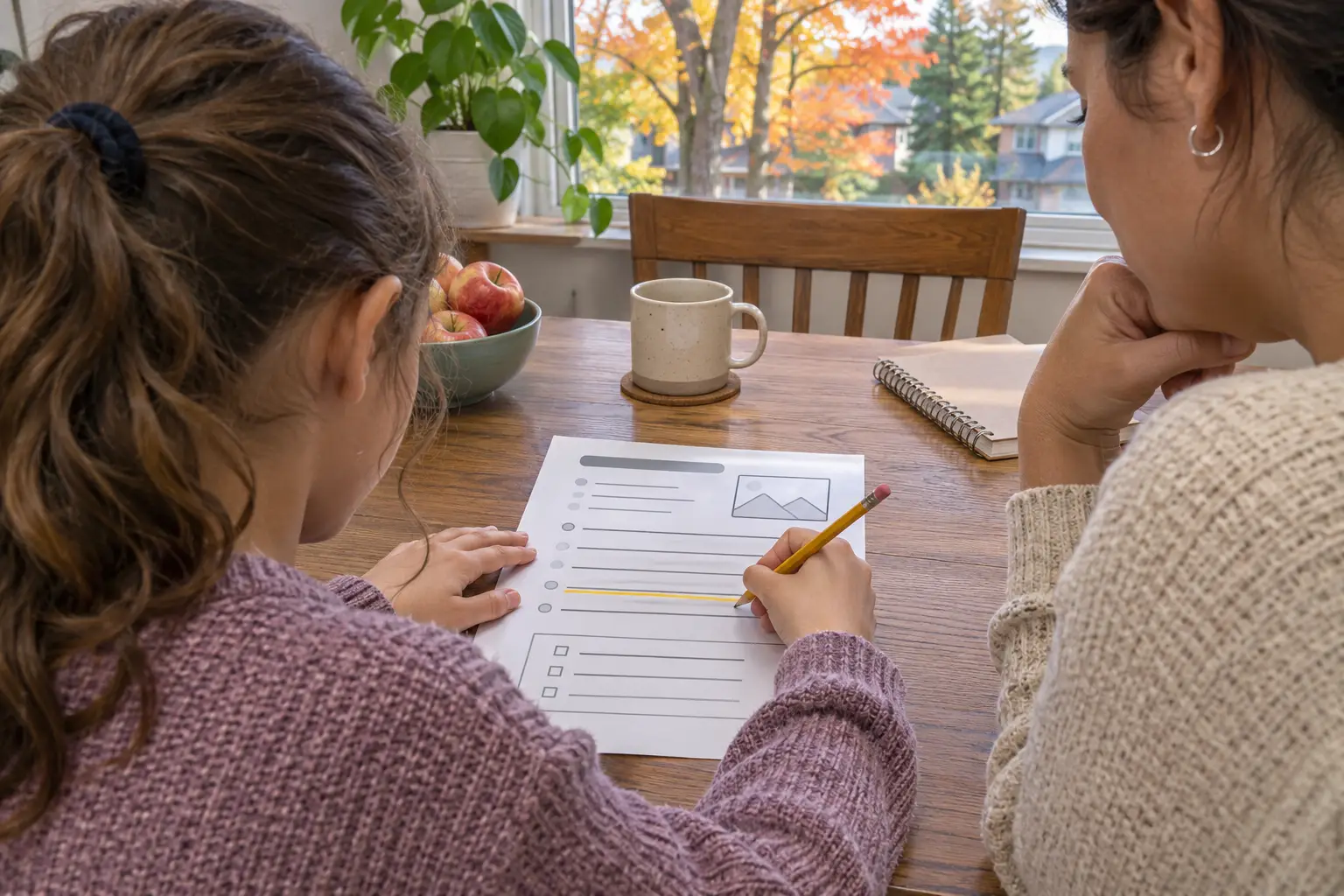
After a move to an English-language classroom in Canada, your child might know the answer and still pause over what the worksheet asks them to do. Start with one real instruction, such as “Underline the title and circle two adjectives.” On a separate piece of paper, have them mark the action words underline and circle, then point to what goes with each one. Ask them to show you the difference between making a line and drawing a circle.
Take the instruction one step at a time. First, your child underlines the title. Then they circle two adjectives. They can explain the task in whichever language is easiest, go back to the English wording and tick off each action as they finish it. Try the same prompt with a different number of adjectives so they have to read the instruction again.
Pick one word that comes up repeatedly in this week’s homework, such as explain. Next to it, write an example that shows the difference between giving an answer and saying why it makes sense. If an instruction is still unclear, help your child practise asking the teacher, “Could you show me an example of what you want me to write?” Keep the example in their notebook for the next assignment.
