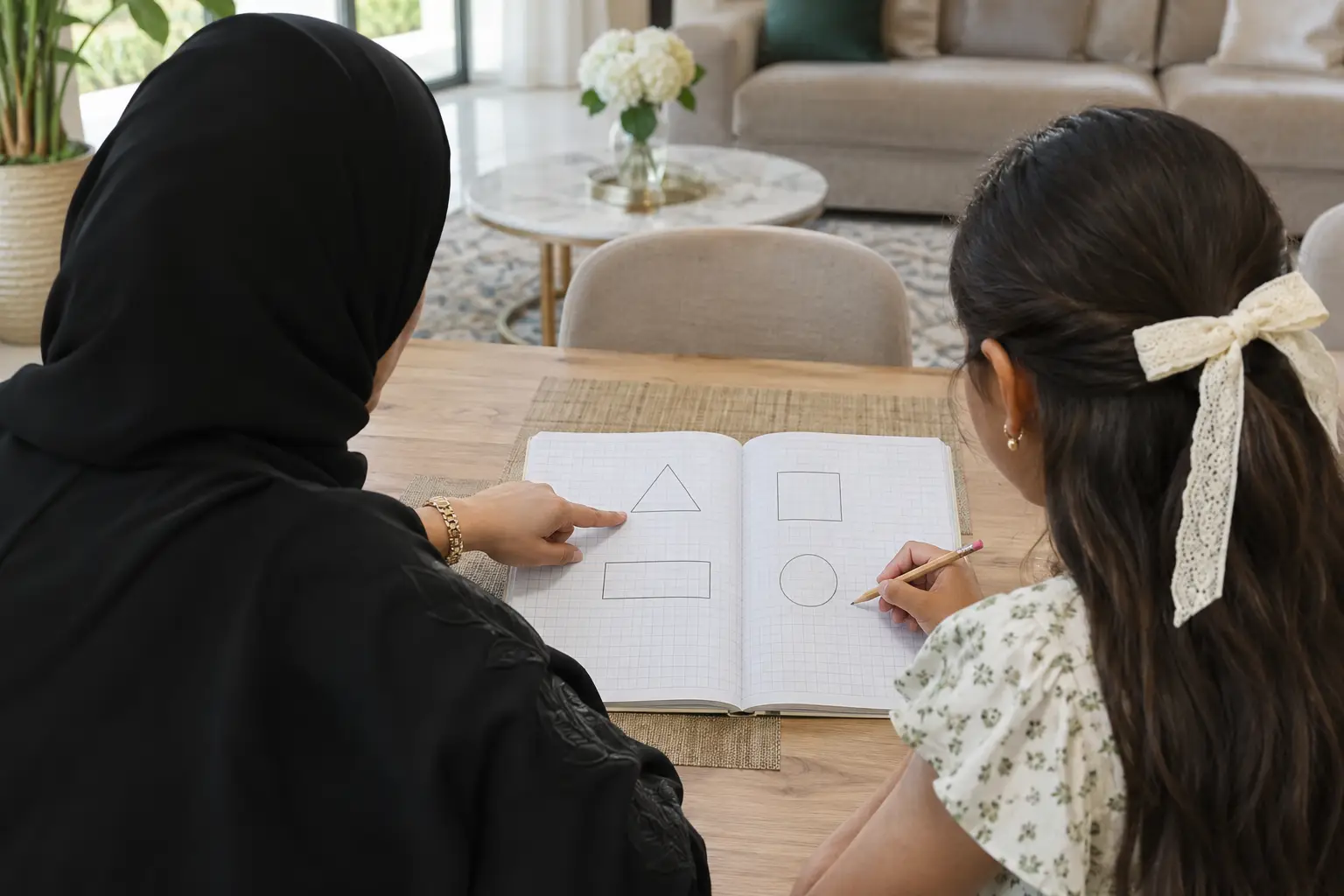
When children move between British- and American-curriculum schools in the UAE, an unfamiliar word on the worksheet can slow them down on a problem they already know how to solve. In 3 × (2 + 4), for instance, British materials may call the curved marks brackets, while American materials may call them parentheses. Ask your child to point to the marks and describe what they’d work out first. Their answer helps you tell whether they need a vocabulary explanation or more practice with the order of operations.
A second pair to watch for is highest common factor (HCF) and greatest common factor (GCF). Both ask for the largest factor that two numbers share. Try 12 and 18 together. Have your child list the common factors 1, 2, 3 and 6, and circle the largest one. Then ask the same question using the other term. Encourage them to explain the answer using the wording from their new worksheet.
Keep a small collection of cards for words that have actually caused a pause. Put both English terms on one side and a tiny worked example on the other. Add a short explanation in Arabic or another home language if it helps your child. Try one term from the latest homework and have them restate the instruction before solving it. If the same confusion keeps coming up, ask the teacher which wording and written method they expect in class.
